29 Jun 2026
Entry Incentives as Bridges: Connecting Card Rooms, Sports Markets, and Reel Spins
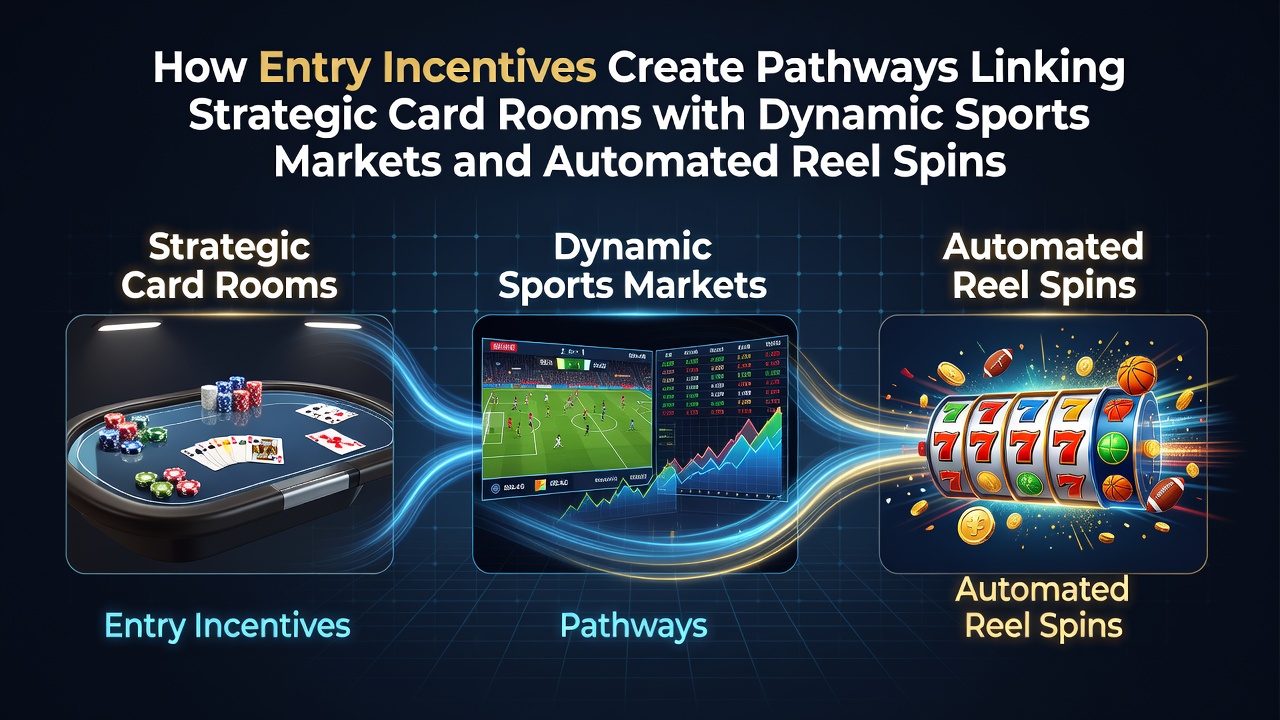
Entry incentives function as structured offers that operators deploy to guide participants from one gaming format into others, and data from multiple markets shows these mechanisms create measurable pathways between card rooms, sports wagering platforms, and automated reel systems. According to reports compiled by the American Gaming Association, operators in regulated U.S. jurisdictions recorded increased cross-format engagement when welcome offers included conditional bonuses that activated after initial table play and carried over to sports markets or reel sessions. These incentives typically appear as deposit matches, free play credits, or risk-free bets that require sequential activity across categories rather than isolated use within a single vertical.
Mechanics of Entry Offers in Card Room Environments
Card rooms operate as strategic environments where players engage in skill-based formats such as poker and table games, and entry incentives often begin here because operators view these venues as high-engagement starting points. Figures released by the Nevada Gaming Control Board indicate that properties offering table-game specific welcome packages saw participants transition into sportsbooks at rates 18 percent higher than locations without such layered offers during the 2025 reporting period. The structure usually requires players to complete a minimum number of hands or achieve a play-through threshold before the incentive unlocks access to sports odds or reel features, which creates a deliberate sequence that links formats without forcing immediate movement.
Pathways Extending into Dynamic Sports Markets
Once initial card room activity satisfies the entry conditions, incentives frequently redirect participants toward live sports markets where odds fluctuate in real time. Industry data compiled by the European Gaming and Betting Association reveals that operators in several EU member states documented a 22 percent rise in sportsbook deposits when card-room bonuses converted into match-day wager credits during the 2025-2026 football season. These conversions occur through integrated player accounts that carry remaining bonus value across platforms, allowing a participant who began at a poker table to place a wager on an upcoming match while the original incentive remains active. Observers note that the timing of these transitions often aligns with major sporting events, which amplifies the effect because dynamic odds create urgency that static reel games may lack.
Transitions to Automated Reel Spins and Hybrid Journeys
Automated reel spins represent the final segment in many incentive pathways because slot mechanisms accommodate high-volume play that helps operators meet wagering requirements efficiently. Research published by the University of Nevada, Reno Gaming Research Center shows that players who entered through card-room offers and continued into sports markets completed reel sessions at higher average volumes when the remaining bonus balance carried forward without reset. The design relies on unified loyalty systems that track progress across all three categories, so a participant finishing a sports bet can immediately access reel features with the same promotional balance. This continuity reduces friction and encourages extended sessions that span strategic card play, market-driven sports wagers, and rapid reel cycles within a single account lifecycle.

Market reports from the Canadian Gaming Association further indicate that multi-format incentive structures introduced in Ontario's regulated market during early 2026 produced measurable shifts in player behavior, with June 2026 data showing a 15 percent increase in accounts that engaged all three categories within 30 days of registration. Operators achieve these outcomes by setting bonus terms that explicitly reference sequential play requirements, such as completing table-game hands before sports credits activate and reel spins become available. The result appears in aggregated transaction logs where entry points at card rooms correlate with later activity spikes in both sports and slots.
Regulatory Context and Market Data Through Mid-2026
Regulatory frameworks in multiple jurisdictions require clear disclosure of how entry incentives operate across formats, and authorities in Australia and several U.S. states have issued updated guidance documents that address cross-category bonus mechanics. Statistics released by the Australian Communications and Media Authority for the 2025-2026 fiscal year documented rising participation in hybrid promotions that begin with table games and extend into sports and slots, while maintaining compliance with responsible gambling provisions. These disclosures help participants understand the sequence required to unlock each stage, which in turn supports sustained engagement across card rooms, dynamic sports markets, and automated reel environments.
Conclusion
Entry incentives continue to serve as structured connectors that link card-room activity with sports markets and reel systems through defined play sequences and unified account systems. Data from regulatory bodies and research institutions across North America, Europe, and Australia demonstrate consistent patterns where initial table-game engagement leads to subsequent participation in other formats when bonus terms are designed for continuity. As operators refine these mechanisms through 2026, the pathways remain visible in transaction records that track movement from strategic card environments into real-time sports wagering and high-volume reel sessions.